
How to Cite a Podcast in MLA 9th Edition
Try it now - paste a URL, DOI, or ISBN
To cite a podcast in MLA 9th edition, put the host in the author slot with the word host after the name, the episode title in quotation marks, and the podcast name in italics, then the season and episode numbers, the publisher, the date and the URL. A podcast episode cited from the Warren County Community College MLA 9 guide looks like this: Koenig, Sarah, host. "The Alibi." Serial, season 1, episode 1, WBEZ, serialpodcast.org/season-one. Accessed 23 Apr. 2016. In your sentence the citation is (Koenig), plus a time stamp when you quote.
That covers a single episode with one host, heard on the show's website. The rest of this guide handles the cases where that pattern stops being obvious: two hosts, a guest host, an episode you heard in Spotify or Apple Podcasts, a show inside a radio network's website, a whole series, a video podcast on YouTube, and how to quote a conversation between host and guest.
The official MLA 9 rule
MLA 9 has no podcast template. The MLA Handbook (9th ed., 2021) builds every entry from the same core elements in the same order: author, title of source, title of container, other contributors, version, number, publisher, publication date, location. A podcast episode fills them like this:
Host Surname, First Name, host. "Episode Title." Podcast Name, season #, episode #, Publisher, Day Mon. Year, URL.
The MLA's own answer on how to cite an episode of a podcast sets out the slot-by-slot logic. That post was written for the eighth edition and carries a banner pointing to the ninth, but the template it follows did not change between editions, so its slot assignments still hold. Element by element:
Author. The host or narrator goes first, surname first, followed by a comma and a role label: host, hosts, or narrator. The label tells your reader that this person presented the episode and did not write a text. The MLA's examples use whichever word the show itself uses, so Malcolm Gladwell is "narrator" for Revisionist History and Ailsa Chang is "host" for Morning Edition.
Title of source. The episode title goes in quotation marks, in title case. MLA title case lowercases articles, prepositions and coordinating conjunctions in the middle of a title, so "Back to School, But Not Back to Normal" as printed on a show page becomes "Back to School, but Not Back to Normal" in your entry.
Title of container. The podcast name, italicized. The episode is part of the podcast the way an article is part of a journal.
Number. Season and episode, lowercase and spelled out: season 1, episode 1. Leave out any number the show does not give. Never invent a season for a show that only numbers episodes.
Publisher. The network or organization that produces the show: WBEZ, Slate Group, Earwolf Podcast Network. The MLA's post on naming a broadcaster in an entry adds that a broadcaster belongs here when it is primarily responsible for producing the work. Skip the publisher when the show is self-published and the host's name would simply repeat.
Publication date. The episode's release date, day month year, with the month abbreviated: 27 Oct. 2021. If the episode carries no date, the MLA's eighth-edition answer says to use the copyright date of the website. If the site shows neither, leave the date out and add an access date at the end.
Location. The URL. The MLA's own podcast examples drop the https:// prefix. The School of the Art Institute of Chicago's MLA 9 podcast guide reads section 5.96 of the Handbook the same way: give the URL, and if it runs past three lines, cut the protocol first and then anything after the host name that a reader does not need.
The in-text citation is the first word of the entry: the host's surname, (Koenig). For two hosts it is both surnames, (Fischer and Kinsey). For three or more hosts, the first surname and et al.
Worked examples
Every entry below comes from either the MLA's own answers or an MLA 9 library guide. Where a guide's punctuation drifted from MLA 9, the corrected version is printed and the change is noted. All URLs are the ones those sources print, so check them against the live page before you submit.
1. One host, heard on the show's website
Koenig, Sarah, host. "The Alibi." Serial, season 1, episode 1, WBEZ, serialpodcast.org/season-one. Accessed 23 Apr. 2016.
In-text: (Koenig). The Warren County guide's example gives no release date and ends with an access date instead. That is the right move when you cannot find the date. If you can find it, put it after the publisher and drop the access date.
2. A narrated show from the MLA's own answer
Gladwell, Malcolm, narrator. "The Lady Vanishes." Revisionist History, season 1, episode 1, Slate Group, 2016, revisionisthistory.com/seasons?selected=season-1.
In-text: (Gladwell). The date here is a year alone because the web page the MLA used showed only the copyright year. When the episode page gives a full date, use the full date.
3. Two co-hosts
Fischer, Jenna, and Angela Kinsey, hosts. "Two Weeks." Office Ladies, episode 97, Earwolf Podcast Network, 27 Oct. 2021, www.officeladies.com/episodes/2021/27/10/episode-97-two-weeks.
In-text: (Fischer and Kinsey). Spartanburg Community College's MLA guide prints this example as "Fischer, Jenna and Angela Kinsey, hosts." MLA 9 puts a comma after the first author's given name before "and", the same as for a two-author book, so the version above adds it. The label becomes plural, hosts, and appears once after the second name. Office Ladies numbers episodes without seasons, so the entry has an episode number only.
4. A guest host
Bianculli, David, host. "Margo Price." Fresh Air, Podcasts app, 31 Jan. 2019.
The MLA's answer on a guest host versus the regular host is direct: list whoever hosted the episode you are citing. Terry Gross is the regular host of Fresh Air, but David Bianculli hosted this one, so he leads the entry and her name does not appear. In-text: (Bianculli).
5. An episode with no publisher listed
Vo, Cathy, host. "Back to School, but Not Back to Normal." Self Evident: Asian America's Stories, episode 23, 23 Nov. 2021, selfevidentshow.com/episode-23.
The SAIC guide records the details for this episode: host Cathy Vo, episode 23, released 23 November 2021, 40:08 long. The guide's own MLA line gives the episode number as a bare "23" and drops the closing quotation mark after the title. The version above labels the number, applies MLA title case to "but", and closes the quotation. The guide lists producers Julia Shu and James Boo; MLA treats producers as optional contributors, so add "produced by Julia Shu and James Boo" after the podcast title only if your argument is about how the episode was made.
6. A reading published as a podcast episode
Sullivan, Anne O. "The Bees." Read by Anne-Marie Cusac. Poem of the Day, Poetry Foundation, 27 Aug. 2017, www.poetryfoundation.org/podcasts/76357/the-bees.
When the episode is a poem or story read aloud, the writer is the author and the reader becomes an other contributor after the title. The MLA uses this example in its answer on citing the audio of a literary reading, and the placement of "Read by" tells the reader that Cusac read this one poem and did not host the whole series. In-text: (Sullivan). If your paper is about the performance and not the poem, lead with the reader instead: Cusac, Anne-Marie, reader.
Where you listened changes the entry
Many students first hear an episode in an app and only later wonder whether Spotify belongs in the citation. MLA's answer depends on what you can show the reader.
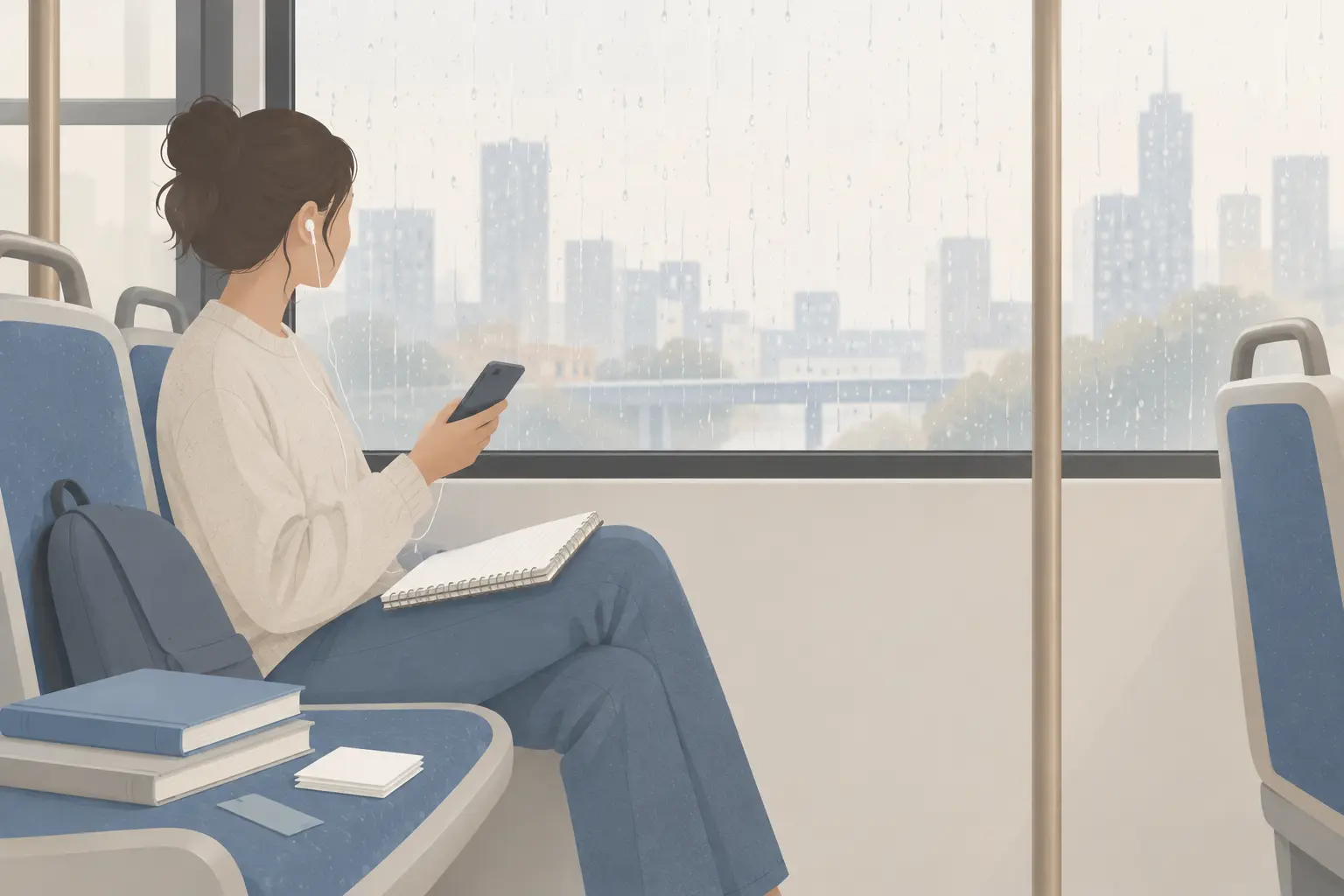
7. Heard in Spotify, Apple Podcasts or another app
Gladwell, Malcolm, narrator. "The Lady Vanishes." Revisionist History, iTunes app, 16 June 2016.
The MLA's podcast answer puts the app's name in the Version slot and asks you to record what the app displays. In the app, this episode showed no season, episode number or publisher, but did show a specific date, so the entry carries exactly those details. The same logic gives "Spotify app" or "Podcasts app" for current listening. There is no URL because an app episode has none a reader can open.
The SAIC guide's advice is more practical: if you listened on a phone, search the episode title, find the show's web page, and cite that. A web entry gives your reader a link, and show pages usually list the season, episode and publisher an app hides. Use the app version when you cannot find a web page, or when the app version differs (a re-edited episode, an ad-free cut).
8. A show that sits inside a larger website
Chang, Ailsa, host. "Why Scientists Can't Explain All the Appeal of an Eclipse." Morning Edition, NPR, 11 Aug. 2017. NPR, www.npr.org/2017/08/11/542753070/scientists-can-t-explain-all-the-appeal-of-an-eclipse.
Radio programs that publish their segments as podcasts often live on the network's site. The MLA treats the network's website as a second container: everything up to the date describes the program, then the italicized site name and the URL describe where you found it. A period separates the two containers.
9. A show with two publishers
"Yiyun Li Reads 'On the Street Where You Live.'" The Writer's Voice: New Fiction from The New Yorker, The New Yorker / WNYC Studios, 3 Jan. 2017. WNYC, www.wnyc.org/shows/tnyauthorsvoice/3.
The MLA's broadcaster answer lists WNYC Studios as copublisher of this episode. That 2017 answer joins the two names with "and". The MLA's 2023 ninth-edition answer on quoting film dialogue separates copublishers with a spaced forward slash (Focus Features / Indian Paintbrush), so the entry above uses the slash. This entry has no host, so the episode title moves to the author position and the in-text citation becomes a shortened title: ("Yiyun Li Reads").
10. A whole podcast series
Gardner, Jaison, and Kaila Story. Strange Fruit. Louisville Public Media, www.lpm.org/podcast/strange-fruit.
When you discuss a show in general and not one episode, the podcast itself is the source, so its name is italicized in the title slot and there is no container. Southern New Hampshire University's library FAQ gives this format for a series and a separate one for an episode. Its examples omit the host label; add "hosts" after the second name if you label hosts in your other entries, and keep the choice consistent. In-text: (Gardner and Story).
If you discuss several episodes of one show, give each episode its own entry. The MLA's reasoning for TV applies here: hosts, guests and dates change by episode, so one series entry cannot carry the details a reader needs to find a quotation.
11. A video podcast watched on YouTube
When you watched the episode on YouTube, YouTube is the container. The MLA's answer on a TV episode published on YouTube italicizes the video's title exactly as YouTube shows it, lists YouTube as the container, credits the channel with "uploaded by" and the account name reproduced exactly, and gives the upload date and URL. The series name, season and episode drop out unless they are part of the video title.
Host Surname, First Name, host. Video Title as Shown on YouTube. YouTube, uploaded by Channel Name, Day Mon. Year, www.youtube.com/watch?v=....
Use this pattern only if you watched. If you listened to the audio feed of a show that also posts video, cite the audio feed with examples 1 to 7. Our YouTube citation guide covers channel names and upload dates in more depth.
Time stamps and quoting what was said
A podcast has no pages, so MLA 9 points to a time. The MLA's overview of in-text citations, which cites sections 6.3 to 6.30 of the ninth edition, says that when you quote or paraphrase a specific part of a work that has a page number, line number or time stamp, that location marker must go in the parentheses.
Write the time as hours, minutes and seconds separated by colons, and give a range when the quotation runs longer than a moment. The MLA's ninth-edition answer on quoting film and TV dialogue shows the form: (1:22:07–18), which means from 1:22:07 to 1:22:18. With a surname it looks like this:
(Koenig 0:21:30–48)
That time is a placeholder. Use the time shown in your player at the start and end of the words you quote.
Three practical points follow from the rule.
Write down the time while you listen. Players differ: some count down the time remaining, and an episode re-cut to insert new ads can shift every time stamp by a minute or more. Note the time on the version you heard, and if you cite the app version, the time should come from the app.
Name the speaker when it is not the host. The guest is not the author of the episode, so the in-text citation still names the host. Put the guest's name in your sentence so the reader knows who is talking: Guest Name tells Koenig that "[the words you quote]" (Koenig 0:21:30–48). The bracketed parts are placeholders for your own guest, quotation and times.
Set out an exchange like a script. When you quote a back-and-forth, the MLA's film and TV dialogue answer applies the drama rule from section 6.40 of the Handbook. Indent the block half an inch, start each speaker's line with their name in capitals followed by a period, use a hanging indent for lines that run over, and put the time range in parentheses after the last line. Shorter exchanges can run into your prose as ordinary quotations (6.41).
If you paraphrase the argument of a whole episode, a time stamp adds nothing, and the surname alone is enough.
Special cases
The guest is your real source
If you cite an episode for what a guest said in conversation, you have a choice. You can cite the episode under the host, as above, and name the guest in your sentence. Or you can treat it as a published interview: the guest becomes the author, the episode title stays in quotation marks, and "Interview conducted by" and the host's name follow the title. Our guide to citing an interview in MLA 9 covers that pattern. The MLA has not ruled on which to prefer for podcasts. Choose the one that matches what your paper discusses, then use it for every episode you cite.
No host is named
Some shows, especially produced documentary series and network shows, name no host on the episode page. Start with the episode title, as in example 9, and give the producing organization as publisher. Do not move the organization into the author slot: when an organization is both author and publisher, MLA lists it once, as publisher.
Three or more hosts
List the first host followed by et al. and the plural label: Surname, First Name, et al., hosts. In-text: (Surname et al.).
You read the transcript
Many shows publish transcripts. The MLA's eighth-edition answer on unpublished transcripts you made yourself says to cite the audio recording, not your transcript. For a transcript the show published, the MLA has no podcast-specific answer. The defensible choice is to cite what you used. If you quoted from a transcript page, cite that page as a web source, and since a transcript has no time stamps, give no location in the in-text citation. If you listened and used the transcript only to check wording, cite the episode and give time stamps from the audio.
An episode with no title
Some feeds title episodes only with a number. The MLA has not answered this case. The defensible choice is to put the number in the Number element (episode 214) and leave the title slot empty, so the entry runs from the host straight to the italicized podcast name.
Common mistakes and how to avoid them
Italicizing the episode title. The episode is the part and the podcast is the whole, so the episode takes quotation marks and the podcast takes italics. The exceptions are a whole series (example 10) and a YouTube video (example 11), where the source stands alone and is italicized.
Leaving out the role label. "Koenig, Sarah." tells the reader that Koenig wrote something. "Koenig, Sarah, host." tells them she presented it. The label is part of the author element in the MLA's own examples.
Citing the regular host on a guest-hosted episode. Check who actually hosts the episode you are citing. The MLA's answer is to name the guest host and leave the regular host out.
Citing the app with no attempt to find the web page. An app entry gives the reader no URL. Look for the show page first and use the app version only when there is none.
Writing "Podcast" or "Audio podcast episode" in the entry. That descriptor belongs to APA, which puts [Audio podcast episode] in brackets after the title. MLA leaves the format out unless it is needed for clarity. Our APA 7 podcast guide shows the APA pattern if you are switching between styles.
Forgetting the time stamp on a quotation. A quotation from a 70-minute episode with no time points the reader to the entire episode. MLA 9 requires a location marker for quotations from works that have one.
Mismatching the in-text citation and the entry. The word in parentheses must be the first word of the works-cited entry, so a host-led entry gets the host's surname and a title-led entry gets a shortened title in quotation marks. Our guide to formatting a works-cited page in MLA 9 covers alphabetizing and hanging indents.
Quick-reference table
| Case | Works-cited entry | In-text |
|---|---|---|
| One host, website | Koenig, Sarah, host. "The Alibi." Serial, season 1, episode 1, WBEZ, serialpodcast.org/season-one. Accessed 23 Apr. 2016. | (Koenig) |
| Narrator | Gladwell, Malcolm, narrator. "The Lady Vanishes." Revisionist History, season 1, episode 1, Slate Group, 2016, [URL]. | (Gladwell) |
| Two hosts | Fischer, Jenna, and Angela Kinsey, hosts. "Two Weeks." Office Ladies, episode 97, Earwolf Podcast Network, 27 Oct. 2021, [URL]. | (Fischer and Kinsey) |
| Guest host, app | Bianculli, David, host. "Margo Price." Fresh Air, Podcasts app, 31 Jan. 2019. | (Bianculli) |
| Reading | Sullivan, Anne O. "The Bees." Read by Anne-Marie Cusac. Poem of the Day, Poetry Foundation, 27 Aug. 2017, [URL]. | (Sullivan) |
| Second container | Chang, Ailsa, host. "Why Scientists Can't Explain All the Appeal of an Eclipse." Morning Edition, NPR, 11 Aug. 2017. NPR, [URL]. | (Chang) |
| Whole series | Gardner, Jaison, and Kaila Story. Strange Fruit. Louisville Public Media, www.lpm.org/podcast/strange-fruit. | (Gardner and Story) |
| Quotation | Any of the above | (Koenig 0:21:30–48) |
The table replaces long URLs with [URL] to fit; use the full forms from the examples above. The time stamp in the last row is a placeholder.
Frequently Asked Questions
Related Guides
How to Cite an Interview in MLA 9th Edition
Worked MLA 9 examples for every interview you will meet: journal, book, YouTube, email, your own recordings, and the anonymous source with no entry at all.
How to Alphabetize a Works Cited Page in MLA 9
The MLA 9 rules that decide where every entry goes when you alphabetize works cited: same-author stacks, numbers, The, Mc and Mac, particles, and symbols.
How to Check If a Citation Is Real Before You Submit
The four levels of checking whether a citation is real: identifier resolution, metadata match, publication confirmation, and what the source actually says.
Try AllCitations for Free
No account required. Generate your first citation in seconds.
Start Citing for Free